Systematic Print Failure Analysis & Evidence Classification
Addressing repeated print problems requires rigorous classification of physical symptoms prior to random calibration changes. Understanding whether a defect is tied to thermal gradient shifts, kinematic backlash, or geometry orientation prevents compounding variable errors.
«Premature collapse in thin vertical geometries stems from insufficient layer cooling time and cumulative nozzle drag rather than bulk flow variance.»
Physical Symptom Investigation
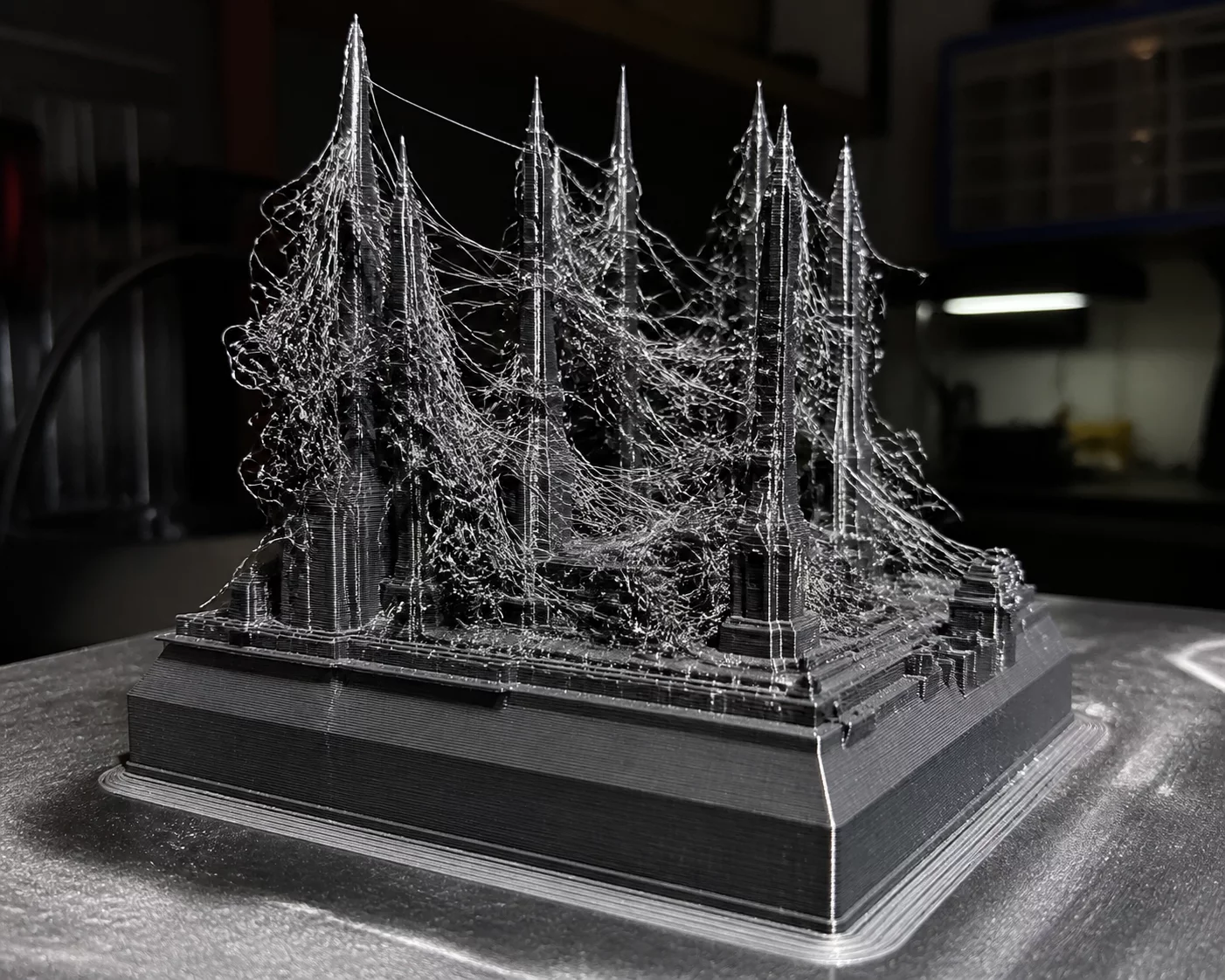
During standard print cycles, massive base sections maintain sharp corners and uniform perimeters. However, once toolpaths transition to isolated upright needles, thin ribs, or delicate antennas, the extruded thermoplastic fails to solidify before subsequent layer passes. The continuous radiant heat from the hotend block softens previous layers, causing plastic deflection, severe stringing, or total mechanical detachment from nozzle lateral shear force.
- Measure minimum layer print duration to ensure at least 8–12 seconds dwell time for passive thermal dissipation.
- Check part cooling fan duct alignment to confirm targeted laminar airflow reaches the tip of narrow geometries.
- Verify retraction distance and wipe moves to prevent nozzle pressure buildup during frequent micro-travels.
Case Diagnoses & Community Logs
Peer-reviewed diagnostic notesNo diagnostic logs recorded yet. Be the first technician to submit an observation.
Submit Diagnostic Observation
Document print failure analysis metrics from your test specimens.