What to Record Before Changing Slicer Settings
Changing slicer parameters prematurely masks mechanical faults and polymer degradation. Before adjusting flow rate, retraction, or print temperatures, log systematic baseline metrics across physical geometry, spool state, and machine kinematics.
Evidence Capture Protocol Checklist
Select a domain to inspect mandatory diagnostic checkpoints.
Filament Diameter & Ovality Tolerances
Measure raw filament across 5 distinct points along a 1-meter span using digital calipers. Record deviations greater than ±0.03 mm. Inconsistent diameter forces erratic extrusion volume irrespective of flow multiplication.
Moisture Content & Acoustic Snapping
Inspect filament brittleness by bending the leading strand 90 degrees. Listen for audible popping or micro-steam hiss during nozzle purging. Trapped moisture vaporizes in the melt zone, causing stringing and surface pitting that slicer retraction cannot fix.
Defect Axis Alignment & Z-Height Index
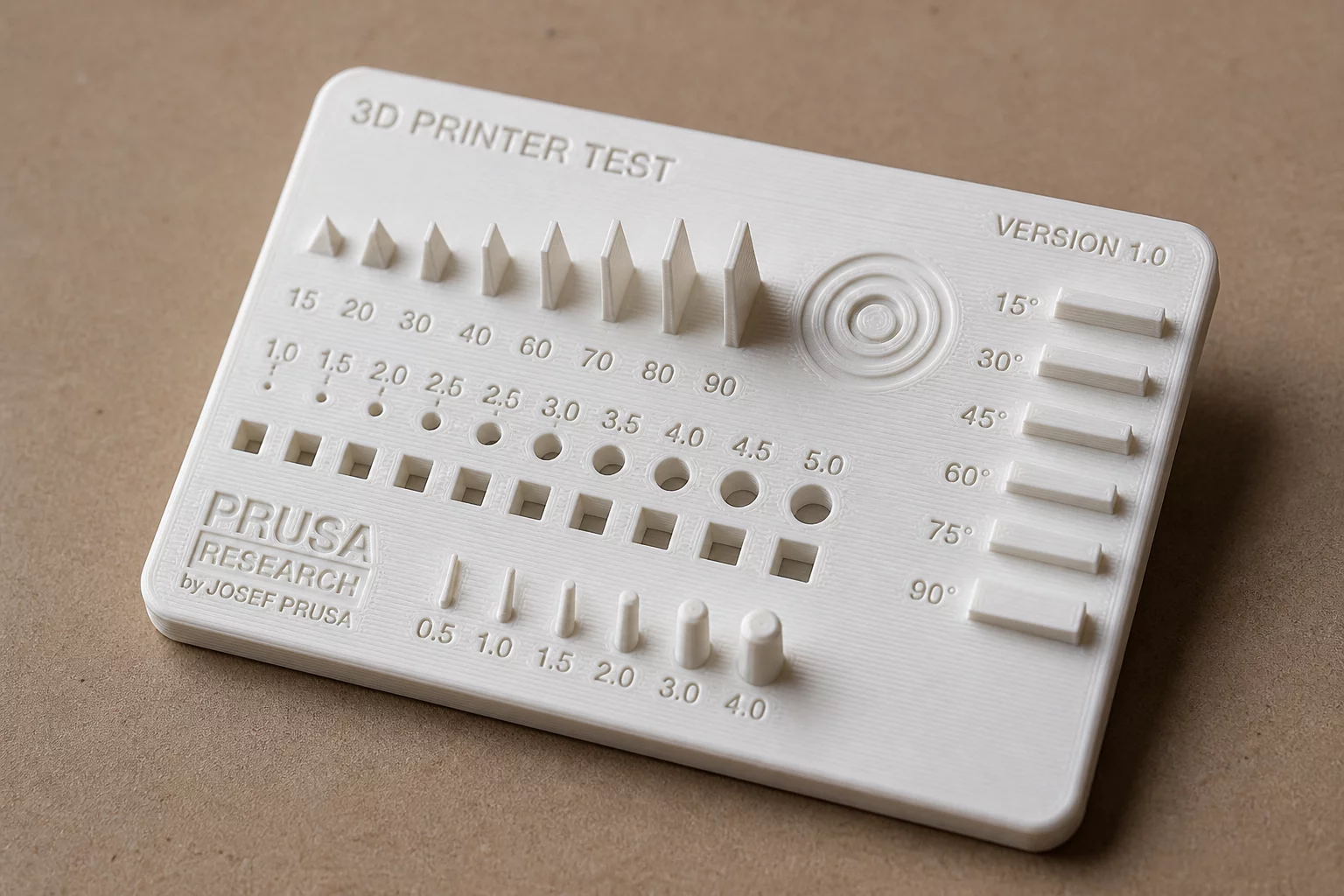
Photograph the failed specimen while still anchored to the build plate. Mark printer coordinate axes (X, Y, Z) directly on the part base. Determine if banding, ringing, or layer separation occurs periodically along lead-screw pitch or specific toolhead motions.
Thermal Drafts & Extruder Gear Tension
Document ambient room temperature fluctuations and draft exposure near the printer enclosure. Verify extruder drive gear teeth for filament dust accumulation and spring arm tension before altering extrusion multiplier or temperature settings.
Observed Visual Defect vs. Pre-Slicer Verification Action
Cross-reference your part symptom with physical verification prior to editing configuration profiles.
| Visual Symptom | Common Slicer Misconception | Mandatory Physical Audit | Reference Atlas Guide |
|---|---|---|---|
| Fine Cobweb Stringing | Excessively increasing retraction distance and speed | Check filament water saturation; measure nozzle orifice wear with pin gauge. | Troubleshooting |
| Cyclic Layer Gaps | Boosting extrusion multiplier / flow rate by +10% | Inspect spool snagging, extruder drive gear grinding, and Bowden tube drag. | Defect Atlas |
| Corner Warping / Lift | Cranking bed temperature past polymer glass transition (Tg) | Degrease PEI surface with 99% IPA; verify ambient cross-breeze and first layer Z-offset. | Brand Support |
| Uniform Periodic Ringing | Slashing acceleration and jerk values arbitrarily | Check timing belt tension frequency (Hz), pulley grub screws, and frame rigidity. | PrusaSlicer Review |
Never Change More Than One Variable Per Test Iteration
Modifying temperature, cooling, and retraction simultaneously creates uncontrolled confounding factors. Follow our structured diagnostic flowcharts to isolate variables systematically.