
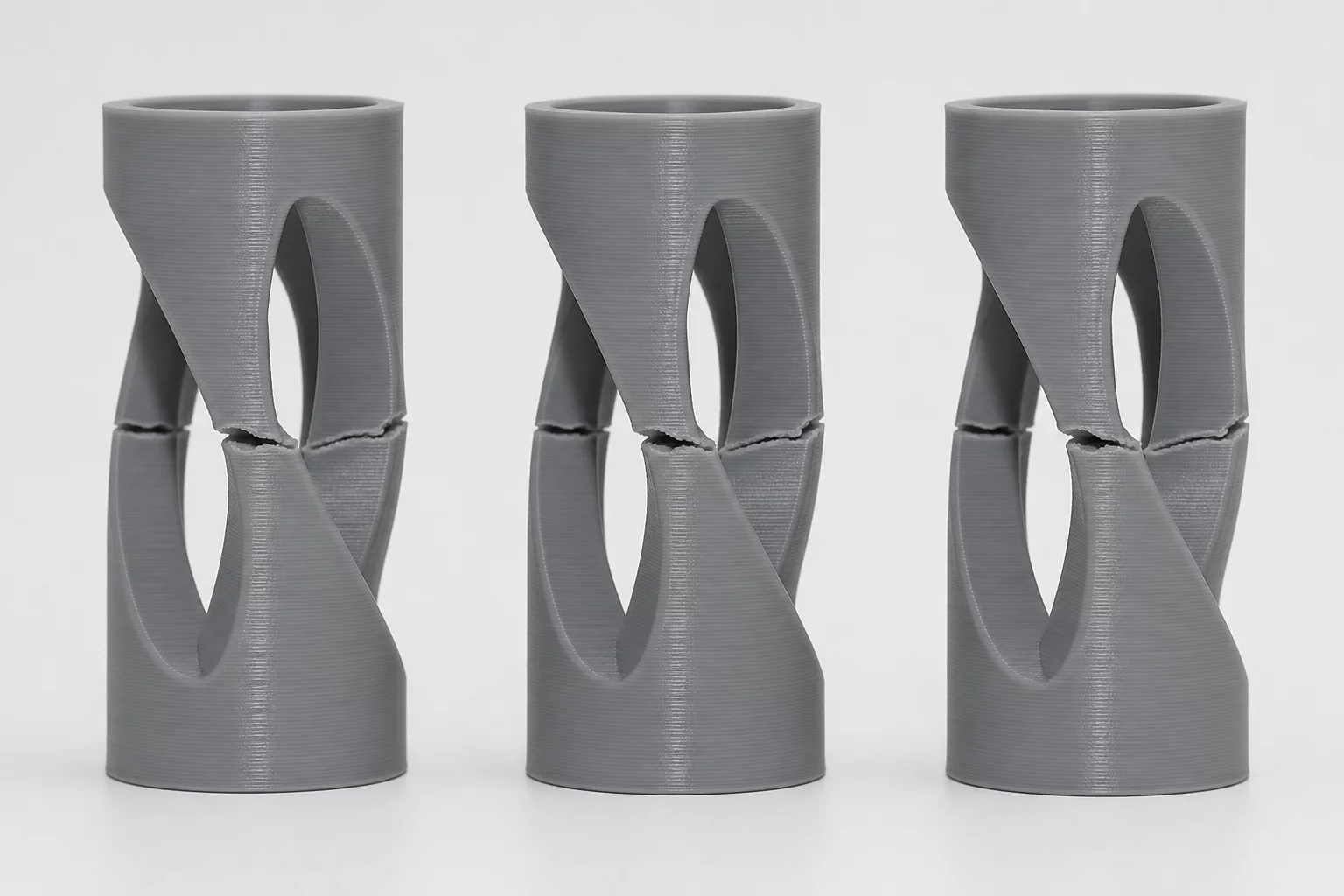
Systematic Print Failure Analysis & Evidence Classification
Addressing repeated print problems requires rigorous classification of physical symptoms prior to random calibration changes. Understanding whether a defect is tied to thermal gradient shifts, kinematic backlash, or geometry orientation prevents compounding variable errors.
«A recurring artifact appearing at identical height coordinates across consecutive cycles indicates an axis-bound mechanical resistance rather than a random extrusion variance.»
Physical Symptom Investigation
In this test series, three identical cylindrical specimens displayed a prominent horizontal rib at precisely Z = 42.8 mm. Measuring across all samples demonstrated zero variation in elevation, which indicates that filament diameter variations or extrusion temperatures are not the primary factor. The physical manifestation remains locked to machine coordinate space.
- The ridge or bulge aligns consistently across multiple consecutive test specimens
- Rotating the digital component on the build plate leaves the defect at the exact same physical Z-coordinate
- Lead screw pitch measurements correlate directly with the visible band repetition spacing
Case Diagnoses & Community Logs
Peer-reviewed diagnostic notesGreat analysis of this issue.
«The geometric periodicity matches the lead screw pitch exactly, indicating mechanical lead screw binding rather than extruder stepper motor skip.»
Submit Diagnostic Observation
Document print failure analysis metrics from your test specimens.