Systematic Print Failure Analysis & Evidence Classification
Addressing repeated print problems requires rigorous classification of physical symptoms prior to random calibration changes. Understanding whether a defect is tied to thermal gradient shifts, kinematic backlash, or geometry orientation prevents compounding variable errors.
«Do not recalibrate volumetric flow rate or mechanical motion kinematics for a minor gloss alteration until you verify whether layer bond strength and dimensional boundary limits have drifted.»
Physical Symptom Investigation
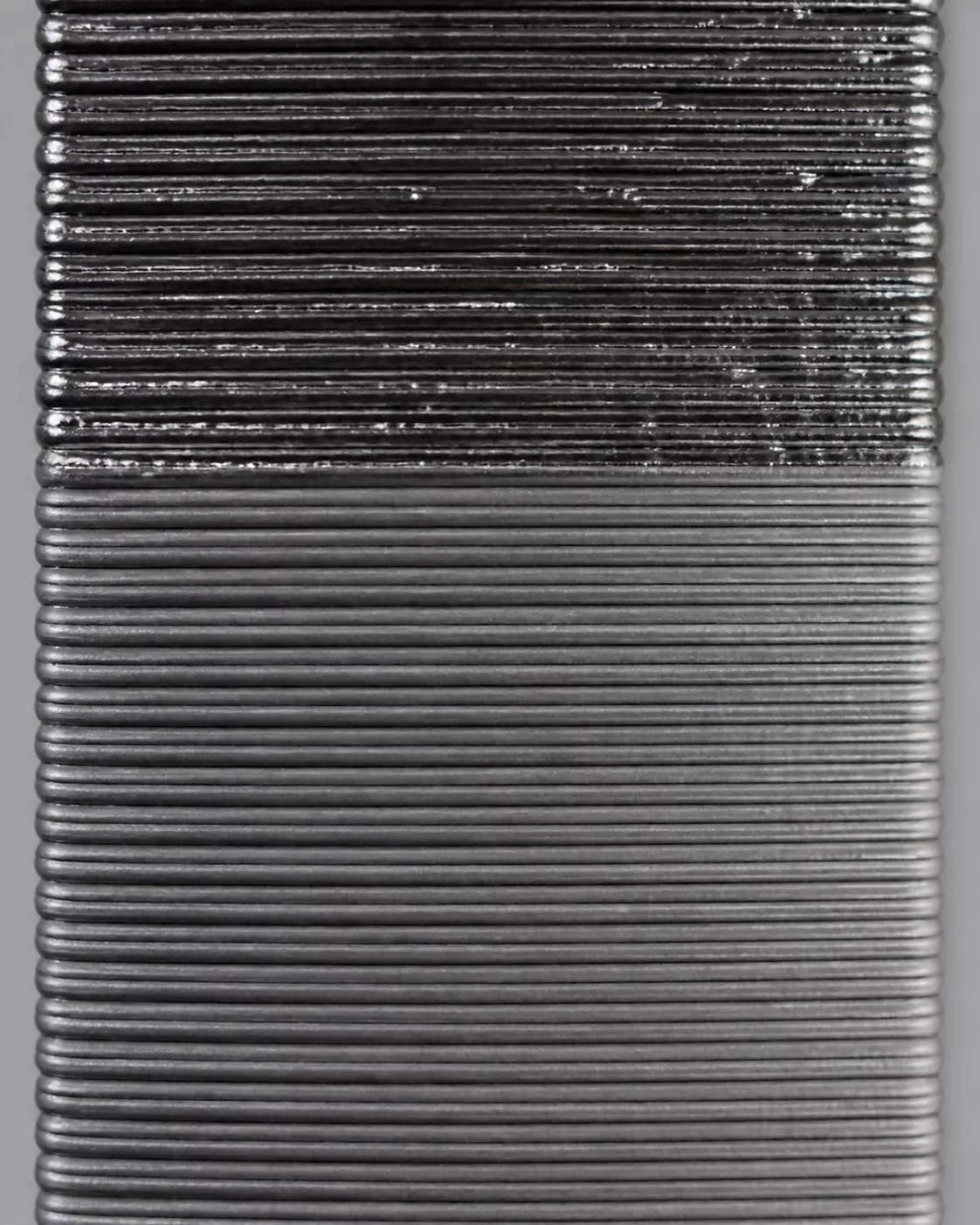
Cosmetic surface variation frequently mimics critical extrusion failures while leaving structural integrity untouched. Operators often observe sudden shifts between matte and glossy bands on perimeter walls, minor micro-banding without perimeter displacement, or localized sheen differences across varying layer times. The primary diagnostic challenge lies in determining whether these visual indicators represent a harmless aesthetic quirk caused by cooling fan dynamics or serve as an early process signal warning of incipient hotend clogging, feeder gear wear, or ambient chamber temperature fluctuations.
- Measure outer wall thickness with digital calipers across glossy and matte sections to detect dimensional deviations exceeding 0.03mm.
- Perform non-destructive flexural or fingernail delamination tests across the transition boundary to confirm consistent layer adhesion.
- Inspect slicer toolpath layer time previews to verify whether cooling fan speed modulation matches the physical surface sheen change.
Case Diagnoses & Community Logs
Peer-reviewed diagnostic notesSubmit Diagnostic Observation
Document print failure analysis metrics from your test specimens.